
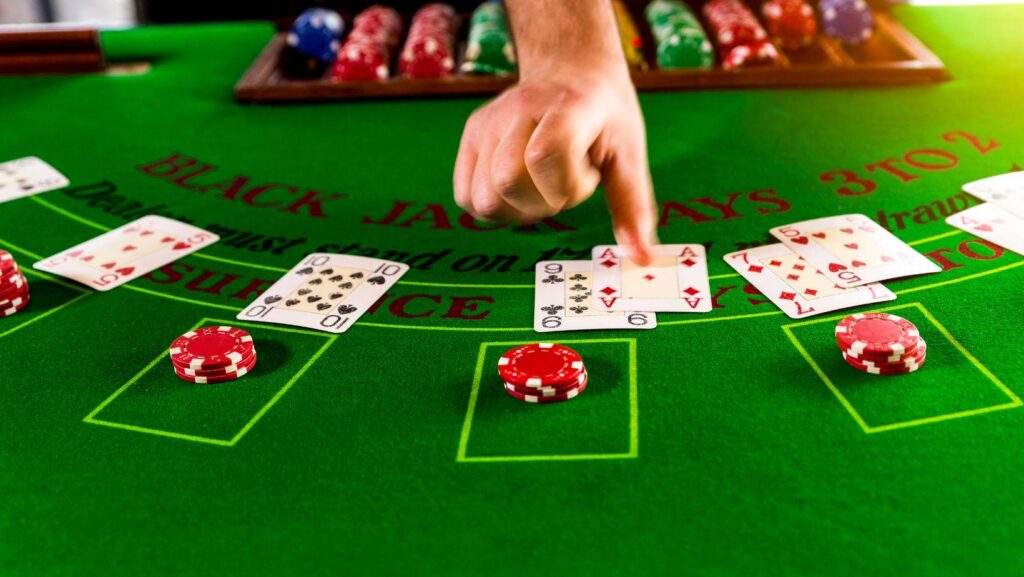
Sitting down at a casino table for the first time takes less preparation than most people expect. The rules for blackjack, roulette and baccarat are short enough to read in under three minutes. Dealers are required to walk new players through the rules before each round begins, which means the table itself teaches you as you go.
What Actually Happens When You Sit Down
On sites like Casino Asino and in real establishments, the physical sequence of sitting at a live casino table is more structured than it looks from a distance. You approach the table, wait for the current round to finish, then take an open seat. The dealer acknowledges you, you exchange cash for chips, and the next round begins. Nothing about that sequence requires prior knowledge.
Most casino tables display the game rules and payout odds printed directly on the felt. That information is there before you place a single chip. If you cannot read it clearly from your seat, you can ask the floor staff for a printed rules card, which every regulated casino is required to provide on request.
The fear most first-time casino visitors describe is social, not financial. They worry about doing something wrong in front of other players. In practice, dealers correct new players quietly and without drawing attention. The table has seen thousands of first-timers, and the staff is trained to handle exactly that.
Choosing the Right Game Before You Sit
Rule complexity is the most reliable filter for picking a starting game. Three games consistently suit beginners because their decision trees are short, their bet types are visible on the table and their minimum bets allow for extended sessions on a limited budget.
Here is a direct comparison of the three most beginner-friendly table games available on any major casino floor:
|
Game |
Number of Bet Types |
Minimum Bet (Typical) |
House Edge (Best Bet) |
Player Decisions per Round |
|
Blackjack |
2 to 4 |
$5 |
0.5% with basic strategy |
1 to 3 |
|
Roulette |
Multiple outside bets |
$5 |
2.7% on single-zero wheel |
1 |
|
Baccarat |
3 |
$10 to $15 |
1.06% on banker bet |
1 |
Baccarat offers only 3 possible bet outcomes: Player, Banker or Tie. That structure makes it the fastest game to understand before your first hand is dealt. Blackjack holds a house edge as low as 0.5% when basic strategy is applied, which makes it the most mathematically rewarding game for a player willing to learn a one-page chart. Roulette tables commonly start with a minimum bet of $5 and require exactly one decision per round, making them the lowest-pressure entry point on the floor.
How the Dealer Helps You More Than You Think
Dealers are not neutral fixtures. They are trained to assist new players without disrupting the pace of the game. A first-time casino visitor who announces they are new will consistently receive clearer instructions, slower dealing and proactive explanations of each step.
What Dealers Explain Before the First Hand
Before a round begins at any regulated table, the dealer confirms that all players understand the basic structure of the game. For a new player, this typically includes the following:
- The goal of the round and what constitutes a win
- Where to place chips on the betting layout
- Which hand signals correspond to which decisions
- What happens when the dealer draws cards
- How payouts are distributed after the round closes
That briefing takes under two minutes and covers everything a beginner needs to participate fully in their first hand.
What to Ask the Dealer Without Hesitation
Dealers answer questions between rounds without treating them as interruptions. There are no questions that are off-limits at a live table. The following are the most useful questions a first-time player can ask before sitting down or immediately after:
- What is the minimum bet at this table?
- Can I see a rules card for this game?
- Is it acceptable to use a strategy card here?
- How do I signal a hit or a stand without speaking?
- What is the payout on a winning hand?
Every one of those questions has a direct answer that takes less than 30 seconds. Asking them is a normal part of how regulated casino floors operate.
Casino Etiquette Every First-Timer Should Know
Casino etiquette for newcomers is not a strict code. It is a small set of observable habits that keep the game moving and avoid friction with other players and staff. Most of it is visible by watching one round before you sit.
Before approaching any table, keep these behavioral basics in mind:
- Wait for the current round to finish before taking a seat
- Place cash flat on the table rather than handing it directly to the dealer
- Do not touch your chips once the dealer has begun dealing
- Use hand signals rather than verbal commands in blackjack
- Avoid giving unsolicited advice to other players at the table
- Keep drinks away from the betting layout and chip stack
None of those rules require memorization. One round of observation from a standing position covers all of them. The lowest-pressure way to learn etiquette is to watch a full round before sitting, which takes between 45 seconds and two minutes depending on the game.
Single Round of Blackjack Step by Step
Blackjack is the game where understanding the sequence before sitting pays off most directly. The round is short, the decisions are binary at their core and the house edge drops to 0.5% the moment a player applies basic strategy consistently.
Here is how a single round unfolds from the moment you are seated:
That sequence takes between 30 seconds and 90 seconds per round. A player with a $100 bankroll at a $5 minimum table can complete 20 full rounds before exhausting their budget, giving enough time to understand every step through direct experience.
Three Baccarat Bets Explained Simply
Baccarat suits nervous newcomers because the player makes exactly one decision per round and the game handles everything else automatically. The three available bets each have a fixed and published return rate, which means no guesswork about what you are risking.
The three baccarat bet types differ in one measurable way, the house edge applied to each:
- Banker bet – carries a house edge of 1.06% after the 5% commission deducted from wins
- Player bet – carries a house edge of 1.24% with no commission applied
- Tie bet – carries a house edge between 9% and 14% depending on the payout structure at the specific table
The banker bet wins more rounds than it loses when ties are excluded, which is why the casino applies a commission to balance the return. Avoiding the tie bet is the only strategic decision a baccarat player needs to make. That single rule, applied consistently, keeps the house edge below 1.1% for the entire session.
Separating Fear from the Reality of Table Games
The gap between what first-time casino visitors expect and what actually happens at a live table is wide. The most common fears are social and procedural, not financial. Each one has a factual answer that eliminates it before you reach the floor.
Common fears among first-time table game players, and the direct facts that counter them:
- Fear of making a mistake publicly – dealers correct errors privately and without emphasis
- Fear of not knowing when to act – the dealer prompts each player individually before moving on
- Fear of losing too much too fast – a $5 minimum table with 20 hands costs $100 at most if every hand is lost
- Fear of judgment from experienced players – casino etiquette prohibits interference with another player’s decisions
- Fear of not understanding the payout – every table displays payout ratios on the felt before the first bet is placed
Every regulated casino table in the United States operates under floor rules that protect new players from exactly these situations. The structure of the game, the dealer’s training and the published odds are all working in the same direction before a single chip moves.